262-446-9222



Can You Be Charged with OWI Without a Chemical Test in Wisconsin?
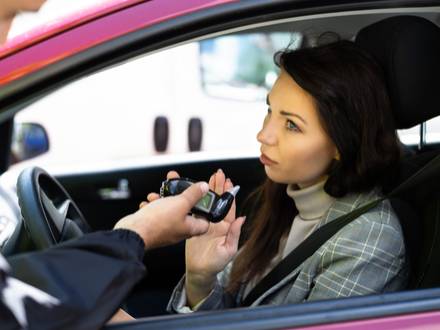 You can be charged with OWI in Wisconsin without a chemical test. A common misconception is that refusing a breath or blood test will make the case fall apart. That is not how Wisconsin law works.
With or without a chemical test, officers can build a case using what they observed directly, and prosecutors can bring OWI charges based entirely on that evidence. If you are facing an OWI charge in 2026 without a chemical test, our Milwaukee County OWI defense lawyer can help you challenge the evidence.
What Is Wisconsin's OWI Law?
Under Wisconsin Statute § 346.63, it is illegal to drive or operate a vehicle while under the influence of an intoxicant. The law does not require a chemical test result to prove that. However, it does address two separate ways to prosecute an OWI case.
The first is based on impairment. The state argues that your ability to drive was affected by alcohol or drugs. The second is based on your BAC level, meaning your blood alcohol concentration was at or above the legal limit of 0.08 percent.
A chemical test is needed for the BAC-based charge because you need an actual number. But the impairment-based charge does not require any number at all. The state just has to show that you were impaired. That can be based entirely on what the officer saw and heard.
What Evidence Do Police Use Instead of a Chemical Test in a Wisconsin OWI Case?
When there is no chemical test, officers rely on what they personally observe. This can cover everything from the moment they first saw your vehicle to the moment they placed you under arrest.
Common types of evidence in no-test OWI cases include:
-
Erratic driving, such as weaving, speeding, drifting between lanes, or sudden braking
-
The smell of alcohol, bloodshot eyes, slurred speech, or an open container in the vehicle
-
Difficulty finding a license or registration, confusion, or unusual statements during the stop
-
Performance on field sobriety tests
-
Dashcam or bodycam footage that captures how the driver looked and acted
All of this can be put in front of a jury without a single BAC number. The officer becomes the main witness, and their account of what they saw and heard is the foundation of the prosecution's case.
What Are Field Sobriety Tests and Can They Be Challenged in Wisconsin?
Field sobriety tests are physical and mental exercises that officers use to look for signs of impairment. The three standard tests are the horizontal gaze nystagmus test, the walk-and-turn, and the one-leg stand. These were developed by the National Highway Traffic Safety Administration.
These tests are far from perfect. There are many reasons a person might struggle with them that have nothing to do with alcohol or drugs. Some of the most common include:
-
Medical conditions like inner ear problems, knee or back injuries, or neurological issues
-
Anxiety or nervousness during the stop
-
Poor lighting or uneven pavement at the scene
-
Improper footwear that makes balance harder
-
An officer who did not give clear instructions or follow proper testing procedures
For field sobriety tests to count as reliable evidence, the officer must be properly trained and must follow required procedures. If they were given incorrectly or under poor conditions, your attorney can challenge how much weight they deserve in court.
What Happens if You Refuse a Chemical Test During a Wisconsin OWI Stop?
Refusing a chemical test in Wisconsin triggers separate consequences under Wisconsin Statute § 343.305. By driving in Wisconsin, you are considered to have given consent to chemical testing. Refusing results in an automatic one-year license revocation for a first offense, separate from whatever happens with the OWI charge itself.
But refusal does not make the OWI charge go away. The prosecution can still move forward using the observational evidence described above. In some cases, a jury is allowed to hear that you refused a test and may draw their own conclusions from that. This is why refusal is not always the protective move people assume it to be.
Can a No-Test OWI Case Be Won in Wisconsin?
OWI cases without a chemical test can sometimes be easier to defend than cases with a BAC result. That is because the prosecution has to rely heavily on officer testimony and field sobriety results, both of which can be challenged.
Your attorney will look at whether the traffic stop itself was legal. If the officer did not have a valid reason to pull you over, the evidence gathered during the stop may be suppressed. Your attorney will also examine whether the field sobriety tests were administered correctly, whether the officer's observations were accurate, and whether anything else explains your appearance or behavior that night.
Video evidence is important in these cases. Dashcam and bodycam footage can either support or completely contradict what an officer wrote in their report. If the video shows that you walked steadily, spoke clearly, and behaved calmly, that is powerful evidence on your side.
Schedule a Free Consultation With Our Waukesha County, WI OWI Defense Attorney
Attorney Paul E. Bucher spent 20 years as the Waukesha County District Attorney, where he personally directed or handled dozens of homicides, hundreds of drunk driving offenses, and thousands of serious drug cases. He has litigated some of the most high-profile and complicated cases in the entire state of Wisconsin and has handled thousands of cases throughout his career. That background gives him a rare understanding of how these cases are built and where they can be taken apart.
Call Bucher Law Group, LLC at 262-446-9222 today to speak with a Milwaukee County OWI defense lawyer.








711 West Moreland Boulevard, #100A,
Waukesha, WI 53188
 262-446-9222
 262-446-9885





Contact Our Firm
 The use of the Internet or this form for communication with the firm or any individual member of the firm does not establish an attorney-client relationship. Confidential or time-sensitive information should not be sent through this form.
I have read and understand the Disclaimer and Privacy Policy.