262-446-9222



What Happens at Your First Court Appearance After a Criminal Arrest in Wisconsin?
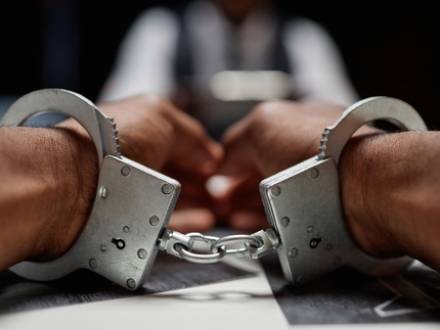 If you or someone you love was just arrested, what happens at the first court date is probably one of the foremost questions on your mind. In Wisconsin, a criminal arrest triggers a series of court appearances that follow a specific order, and knowing what to expect at each stage can help you make better decisions about your case. If you are facing criminal charges in 2026, a Dodge County, WI criminal defense attorney at Bucher Law Group, LLC can support you through each step.
What Is the Initial Appearance After an Arrest? When Does It Happen?
The initial appearance is your first contact with the court after an arrest. Under Wis. Stat. § 970.01, any person who is arrested must be brought before a judge within a reasonable time. A probable cause determination is generally required within 48 hours after a warrantless arrest. This hearing is often held before a court commissioner rather than a judge.
At the initial appearance, the court will cover several key points:
-
The charges against you, along with a copy of the criminal complaint
-
Your right to an attorney, and the right to an appointed attorney if you cannot afford one
-
Bail conditions – whether you will be released, released under conditions, or held, depending on the charges and your ties to the community
Many defendants make the mistake of addressing the judge directly at this hearing. Judges at initial appearances are not there to hear your account of events; that opportunity comes later, and only through your attorney.
What Happens at a Preliminary Hearing in a Wisconsin Felony Case?
If you are charged with a felony, a preliminary hearing follows the initial appearance. This is not a trial. The purpose of a preliminary hearing is limited: the judge reviews whether there is probable cause to believe a felony was committed and that you committed it, a much lower standard than what is required for a conviction.
The prosecution presents evidence, often through witness testimony, and the defense has some opportunity to cross-examine. Many defense attorneys use this hearing strategically to learn how the prosecution intends to build its case. You can also waive the preliminary hearing, which some defendants do to avoid revealing their defense strategy early. If the judge finds probable cause, the case moves forward. If not, the charges are dismissed, though the prosecution may refile.
What Is a Wisconsin Arraignment and What Plea Should You Enter?
The arraignment is the formal proceeding in which charges are officially read, and you enter a plea. Under Wis. Stat. § 971.05, the arraignment must be held in open court. For felonies, the prosecution files a formal charging document called the information after the preliminary hearing or waiver. In practice, most defense attorneys waive the formal reading to speed things along.
At arraignment, you have three options: plead guilty, plead not guilty, or plead no contest. According to Wisconsin Public Radio, the average felony case in Wisconsin took 252 days, or just over eight months, to resolve in 2024. Because criminal cases often take months to work through the court system, a not guilty plea gives your attorney time to review the evidence, identify weaknesses in the prosecution's case, and explore available options. Your attorney will help you decide exactly what to do at your arraignment.
What Should You Avoid Doing Between Wisconsin Criminal Court Dates?
The time between hearings is when much of the most important legal work happens. Your attorney will be reviewing police reports and witness statements and may file pretrial motions to challenge the legality of a search or arrest. On your end, there are clear lines not to cross:
-
Do not contact the alleged victim, witnesses, or anyone connected to the case.
-
Do not discuss the case on social media or with anyone other than your attorney.
-
Do not talk about your case. Anything you say, even to people you trust, can be used against you.
Prosecutors routinely review defendants' social media accounts and phone records, and witnesses talk. Anything inconsistent with your defense can and will be used against you at trial.
Contact a Dodge County, WI Criminal Defense Attorney for a Free Consultation
Attorney Paul Bucher spent 20 years as the Waukesha County District Attorney and personally handled thousands of criminal cases, including hundreds of drunk driving offenses and serious drug charges. He knows how prosecutors build cases because he built them himself. That background gives clients at Bucher Law Group, LLC a significant advantage at every stage of the process. Call 262-446-9222 today to schedule a free consultation with a Racine County, WI criminal law lawyer who has sat on both sides of the courtroom.








711 West Moreland Boulevard, #100A,
Waukesha, WI 53188
 262-446-9222
 262-446-9885





Contact Our Firm
 The use of the Internet or this form for communication with the firm or any individual member of the firm does not establish an attorney-client relationship. Confidential or time-sensitive information should not be sent through this form.
I have read and understand the Disclaimer and Privacy Policy.